Scaling driver onboarding without losing control
TL;DR
I redesigned driver onboarding for high-turnover rental fleets by introducing a fleet-specific self-signup path alongside the existing manager-led workflow.
The new model moved repetitive data entry closer to drivers while keeping approval, vehicle assignment, and operational setup with fleet managers.
After launch, 41% of driver onboarding started through self-signup, while manager effort related to manual driver setup decreased by 33%.
Role
PD
Product Designer
Timeline
2025
Year
Research
B2B
SaaS
Focus
Fleet
Driver Onboarding
Understanding the operational context
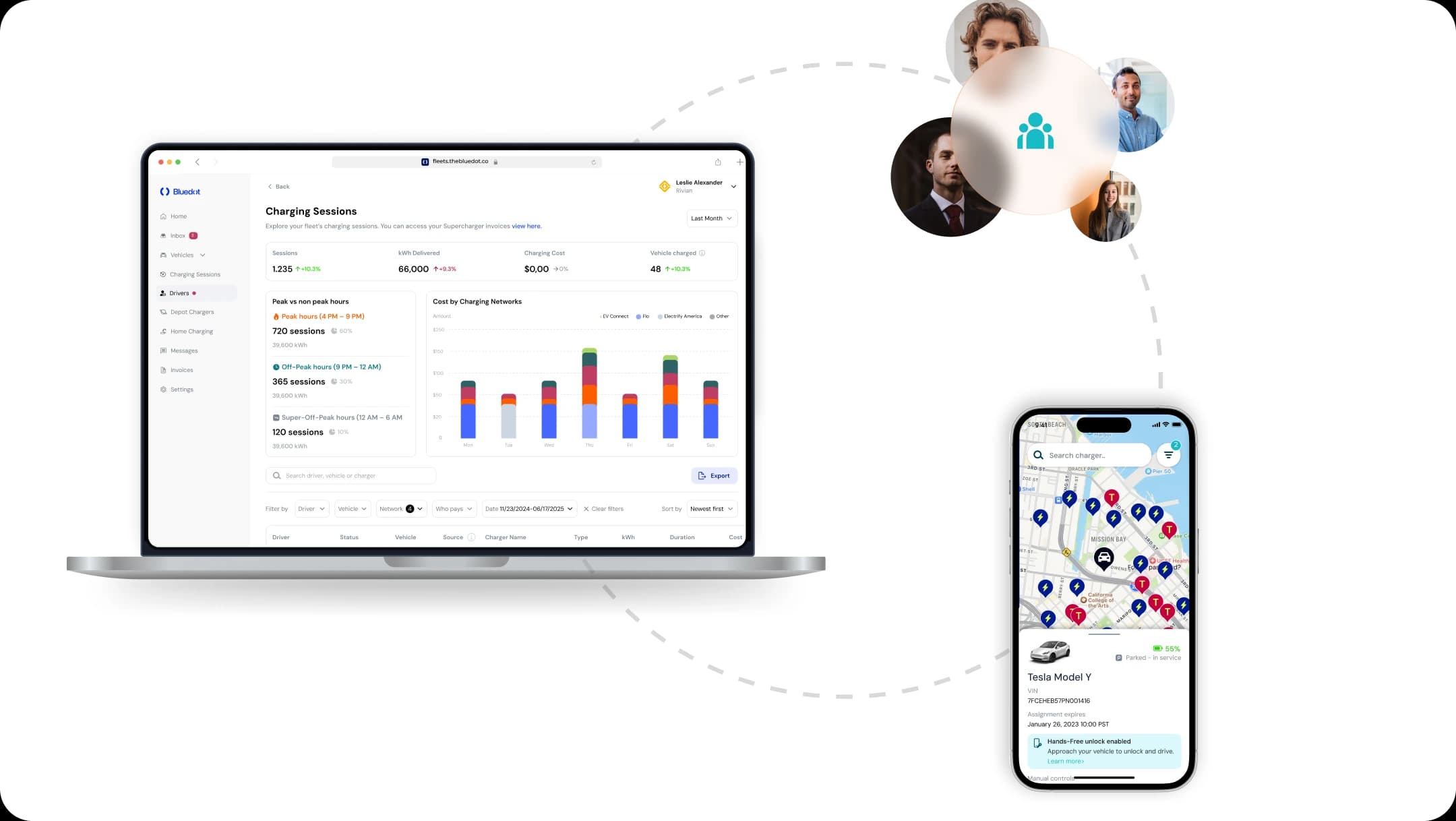
Before exploring the onboarding problem, it was important to understand how drivers entered the broader fleet ecosystem. Fleet managers configured operations through FleetOS, while drivers used the mobile app to access vehicles and manage charging. Driver onboarding was the connection point between these two surfaces.
Why driver onboarding became an operational problem
In rental fleets, adding drivers was not an occasional setup task. It was a recurring operational workflow shaped by frequent driver additions and high turnover.
As fleet volume increased, the existing manager-led onboarding process became increasingly difficult to maintain.
180
Average active drivers per rental fleet
84 / Month
New driver additions in high-turnover fleets
Single access path
Driver onboarding started from the manager side
Recurring fleet feedback
In rental fleets, adding drivers was not an occasional setup task. It was a recurring operational workflow, with frequent new-driver additions and a growing need for a more scalable onboarding path.
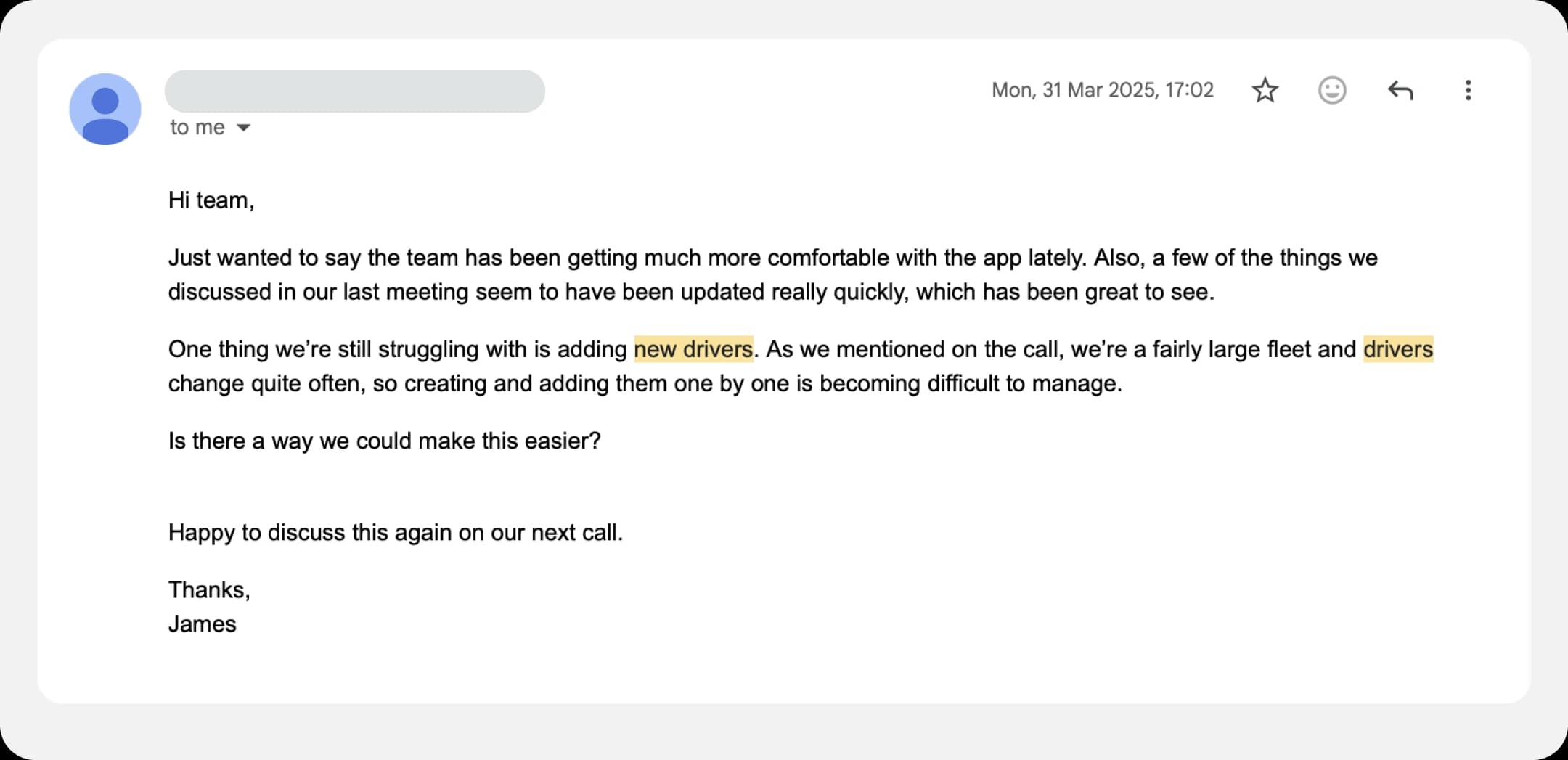
High-volume driver additions
Fleet managers described adding drivers one by one as increasingly difficult to manage as fleet operations changed.
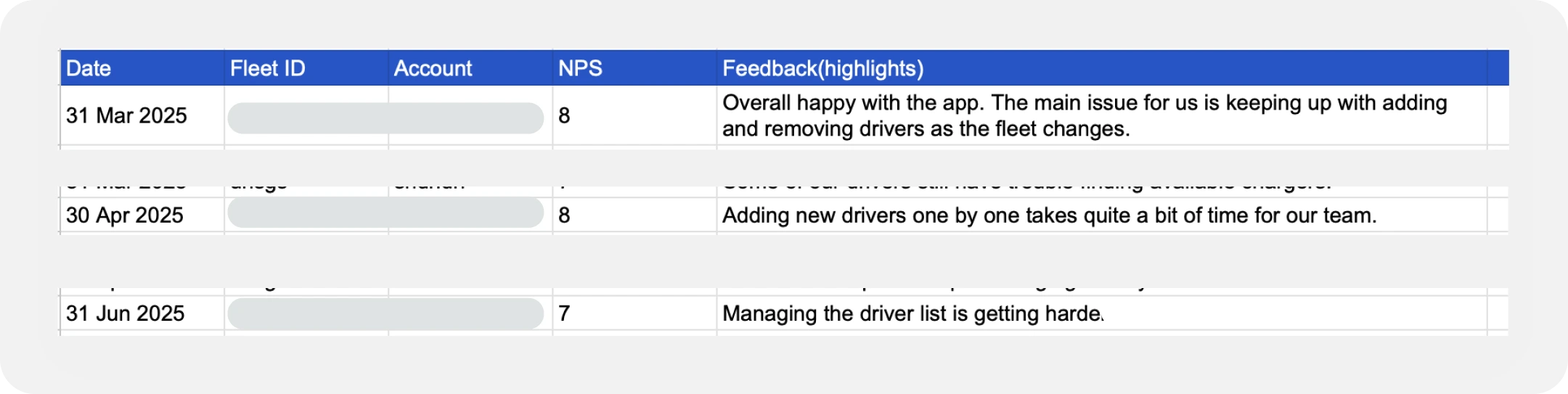
A recurring pattern across fleet accounts
Feedback from multiple fleets pointed to the same issue: manual driver onboarding did not scale as driver volume increased.
Key Insight
The problem wasn't creating driver accounts. Every onboarding path depended on a fleet manager starting the process. Even when drivers could provide their own information, account creation remained dependent on manager-side setup. The opportunity was not to remove managers from onboarding. It was to move repetitive data entry closer to drivers while preserving manager control over operational decisions.
Operational flexibility was missing
Some fleets needed manager-led onboarding, while others needed a faster self-serve path. The product had to support both models without creating more complexity for managers.
100% of access depended on manager setup
Even when drivers could provide their own information, account creation remained entirely dependent on fleet managers.
One onboarding model did not fit every fleet workflow
Some fleets preferred manager-led onboarding, while others needed a more scalable self-serve path for high driver turnover. The product needed to support different operational models without losing manager control.
Design principles
Support flexible onboarding models
Different fleets operated differently. The system needed to support manager-led onboarding, self-signup, and hybrid usage without forcing a single workflow.
Move data entry closer to the source
Drivers could enter their own information where appropriate, reducing manager workload and lowering handoff friction.
Keep critical decisions with managers
Even when onboarding started from the driver side, managers remained in control of approvals and other high-impact decisions.
Make setup repeatable at scale
The onboarding model had to work not just once, but repeatedly across fleets with ongoing driver additions.
Onboarding could start from a fleet-specific signup path
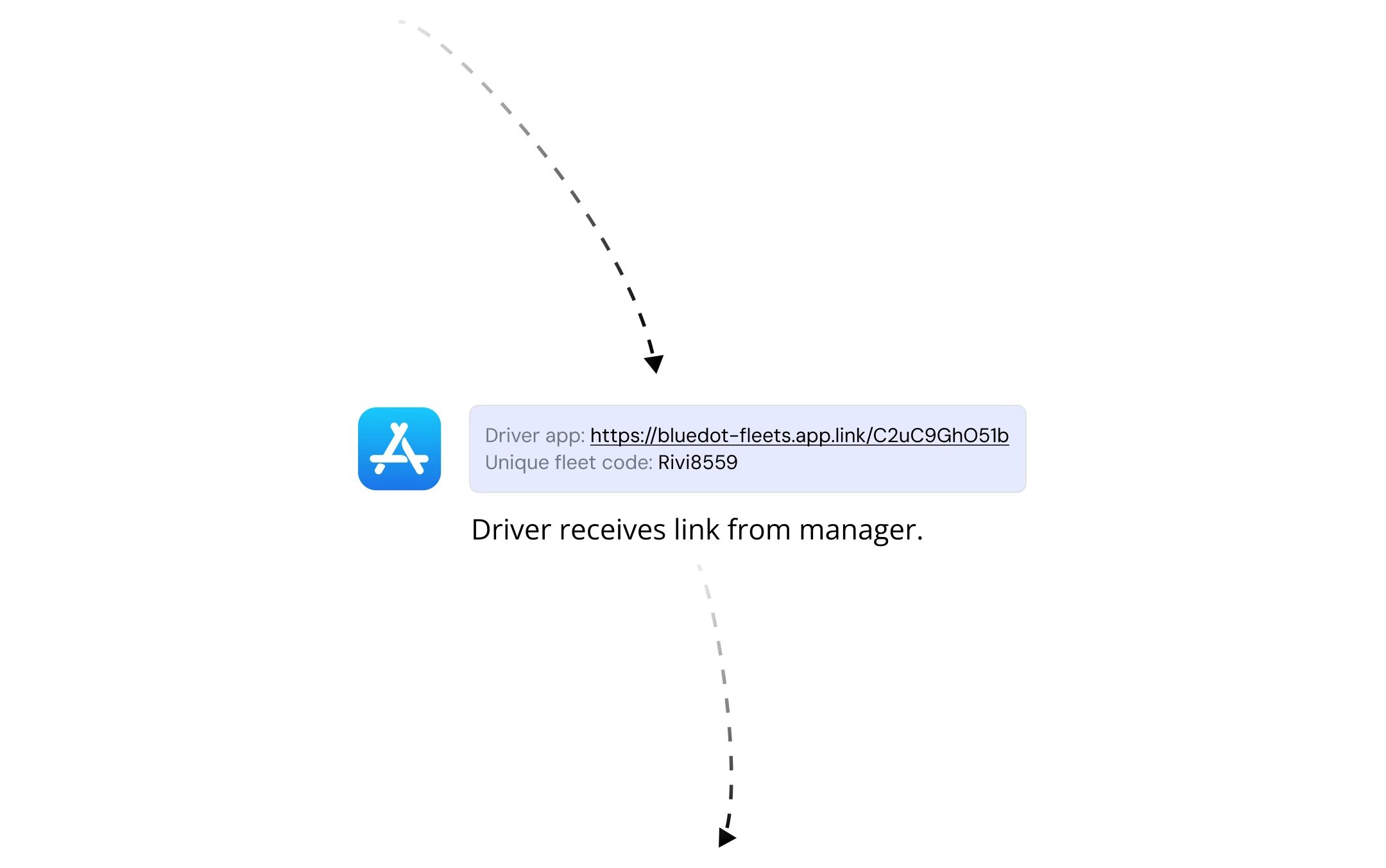
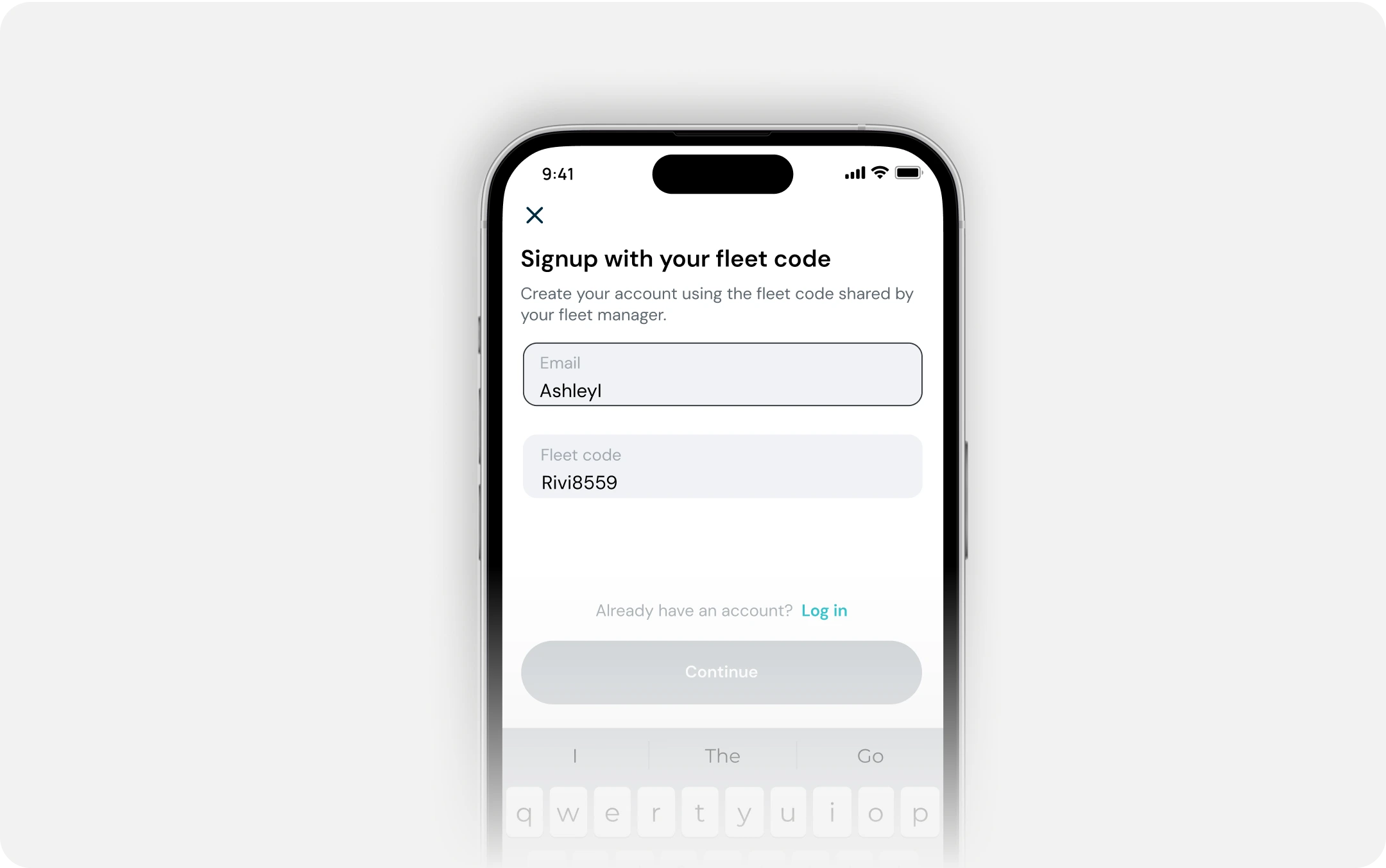
Fleet managers could share a unique fleet code with drivers, giving them a direct entry point into mobile signup. This reduced manual manager-side data entry and created a more scalable onboarding path.
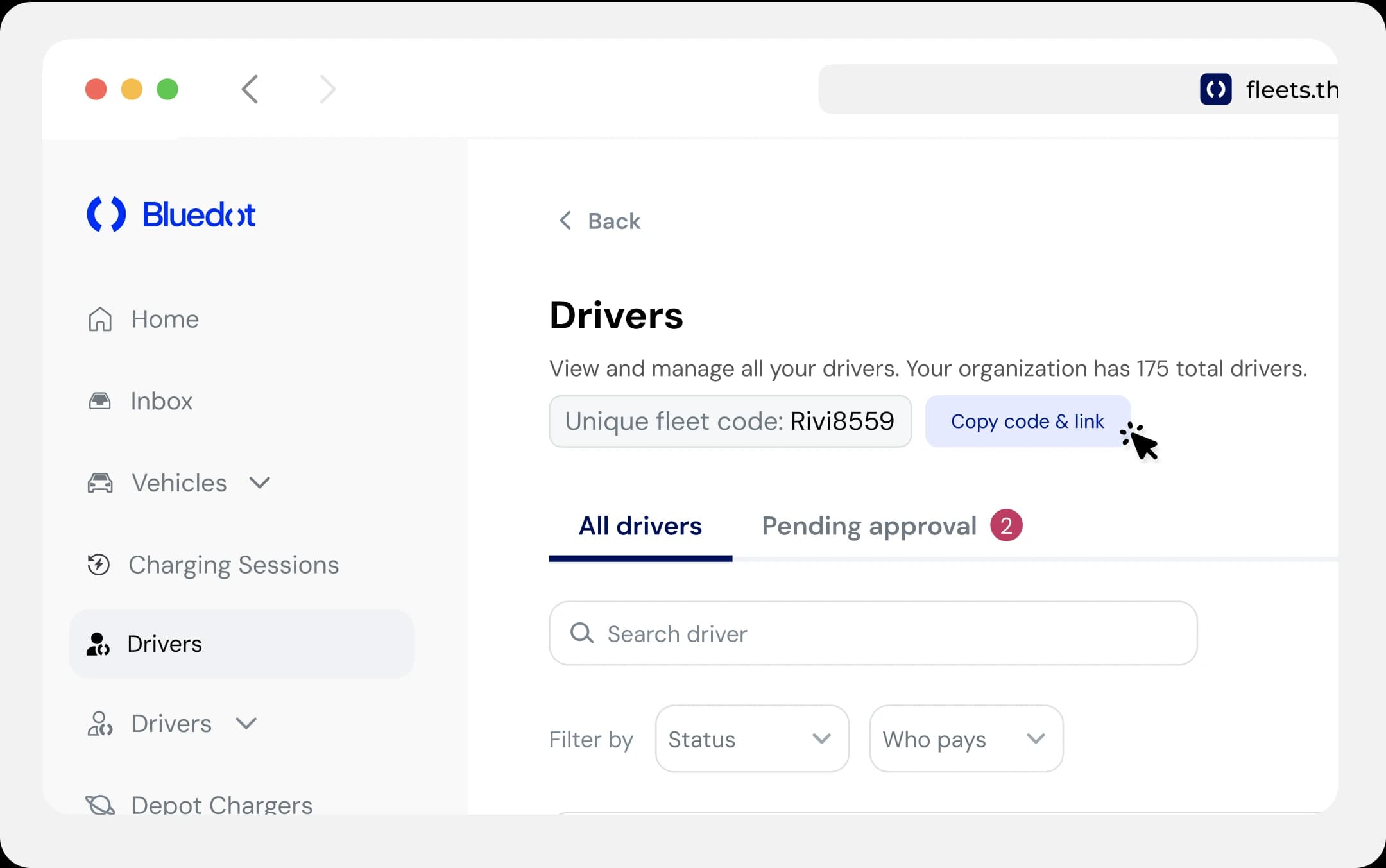
Managers could initiate a scalable onboarding path without manually entering every driver detail.
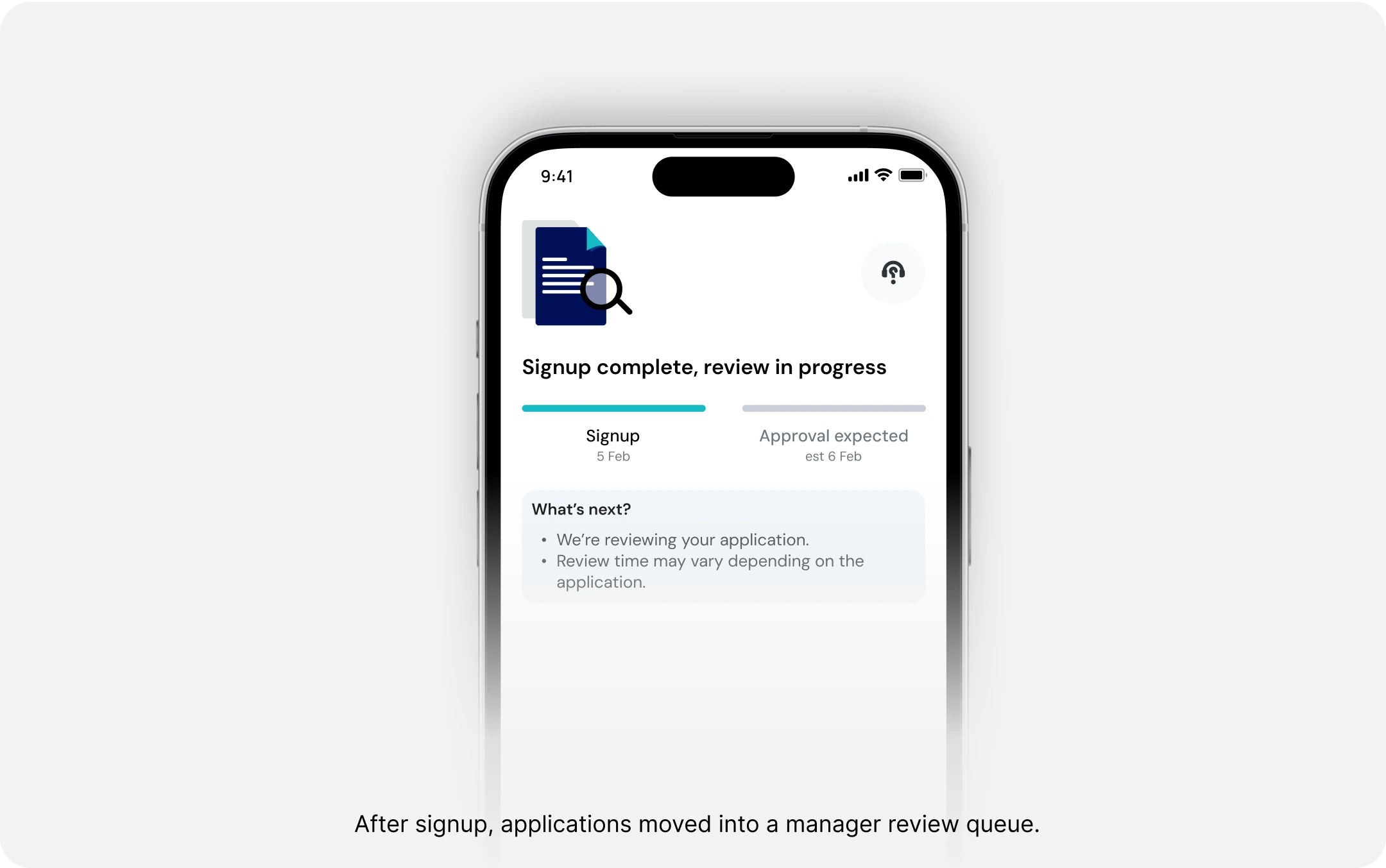
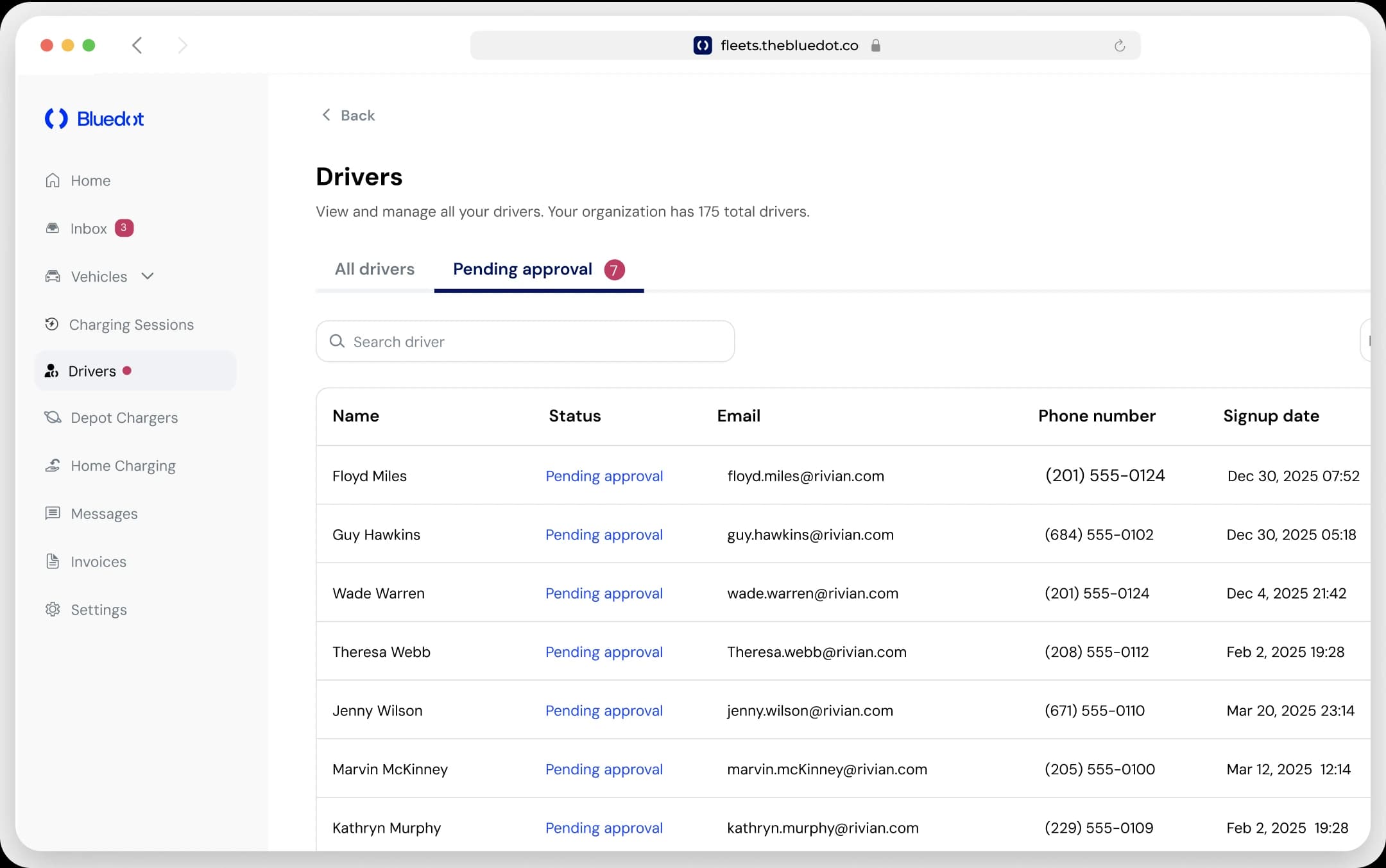
Applications stayed pending until managers approved them
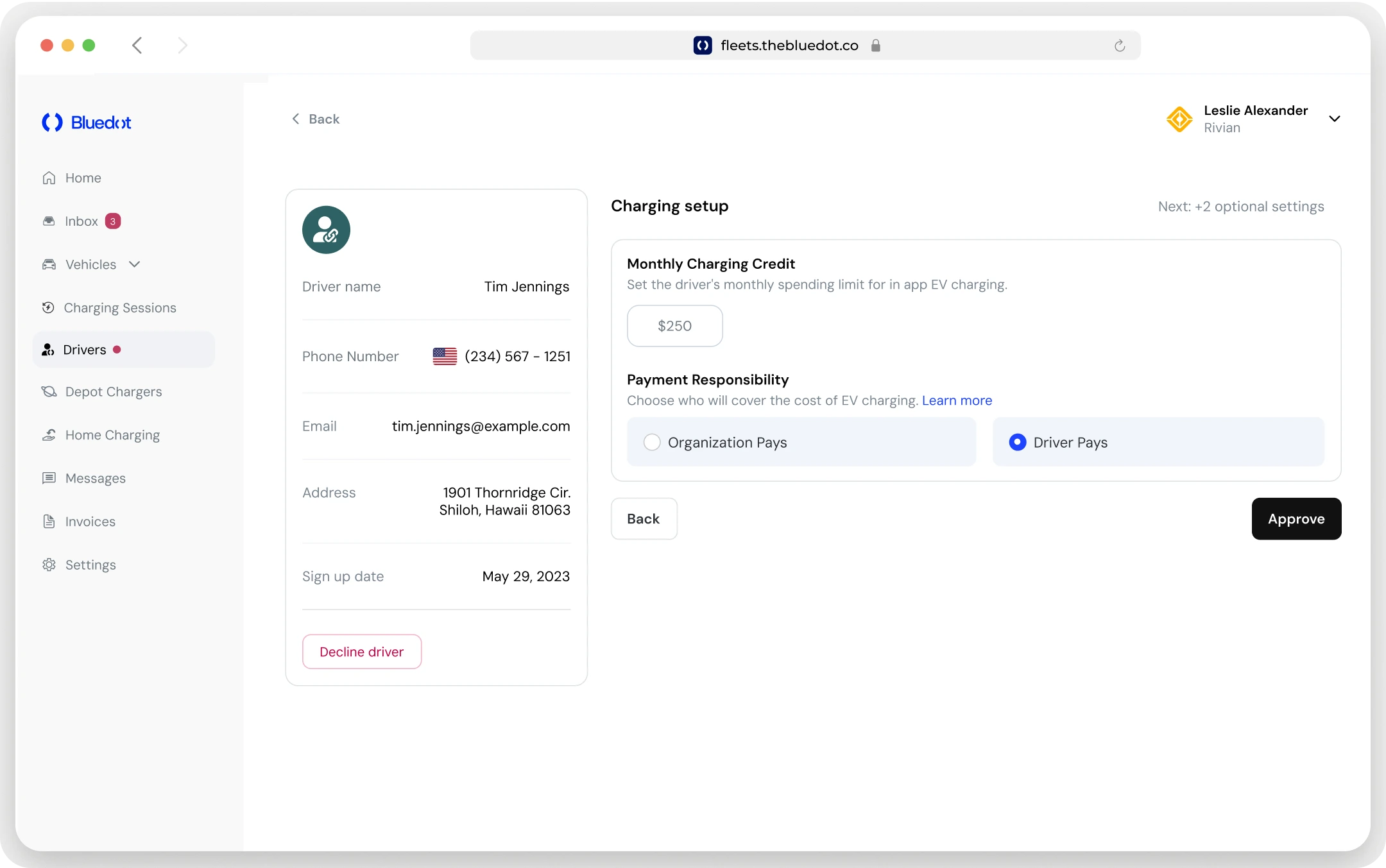
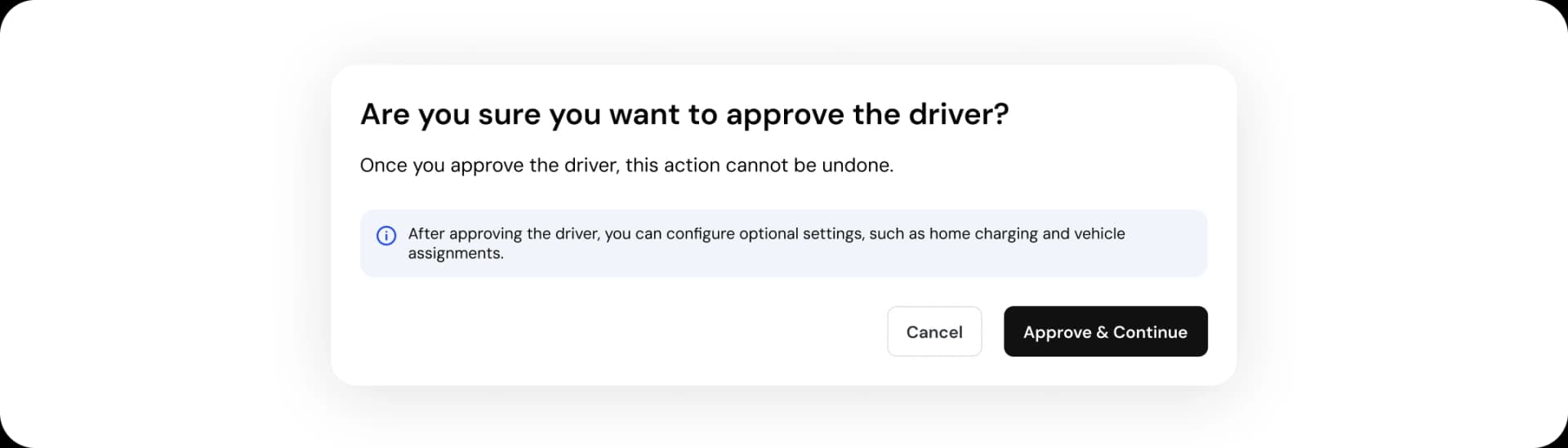
We moved data entry to drivers, but kept activation decisions with managers. The pending approval queue separated signup from operational access.
Why activation became a staged flow
The ideal UX might have been a single flow, but approval, charging setup, and vehicle assignment had different dependencies. A staged structure allowed us to preserve control, support optional steps, and ship within team constraints.
Delivery constraints:
The team optimized for a shippable model
We needed a structure that could be delivered incrementally without blocking the new onboarding path on a more ideal but heavier end-to-end flow.
Operational logic:
Approval was not the end of onboarding
Manager approval confirmed the driver, but activation still required follow-up decisions like charging responsibility, home charging access, and vehicle assignment.
Optionality:
Not every driver needed the same setup
Home charging and vehicle assignment were not relevant for every driver. A staged flow let managers complete only the setup needed in that case.
Technical separation:
Some setup steps had different system dependencies
Charging setup and vehicle assignment depended on different underlying services and data conditions, so keeping them as separate steps reduced implementation risk and made the flow easier to evolve.
The goal was not to create the shortest flow possible. It was to create the most workable flow across product, engineering, operations.
Managers completed the final setup before activation
We kept critical operational decisions with managers by making approval the point where driver access, vehicle assignment, and feature enablement came together.
Results
The new model improved scalability on the driver side while preserving manager control over activation and setup.
41%
Self-signup adoption
Fleets adopted self-signup as a second onboarding path alongside the existing manager-led flow.
Ops / Business:
“The value was not just self-signup. It was being able to add scale while keeping approval and setup with managers.”
33%
Less manager effort
Managers spent less time on manual driver data entry and could focus on review, approval, and setup decisions.
Fleet manager:
“This made onboarding easier during busy periods when we were adding drivers more frequently.”