Finding the right charger, faster
 View Bluedot.co
Charging apps often ask drivers to think like charging experts. Users are expected to understand connector standards, charging speeds and vehicle compatibility before making a decision.
The problem wasn't finding more chargers. It was helping drivers find the right charger. I redesigned the discovery experience around vehicle context, reducing repeated setup and helping users reach compatible charging options faster.
Role
PD
Product Designer
Timeline
3
Months
Research
12
Interviews
Focus
EV
Discovery
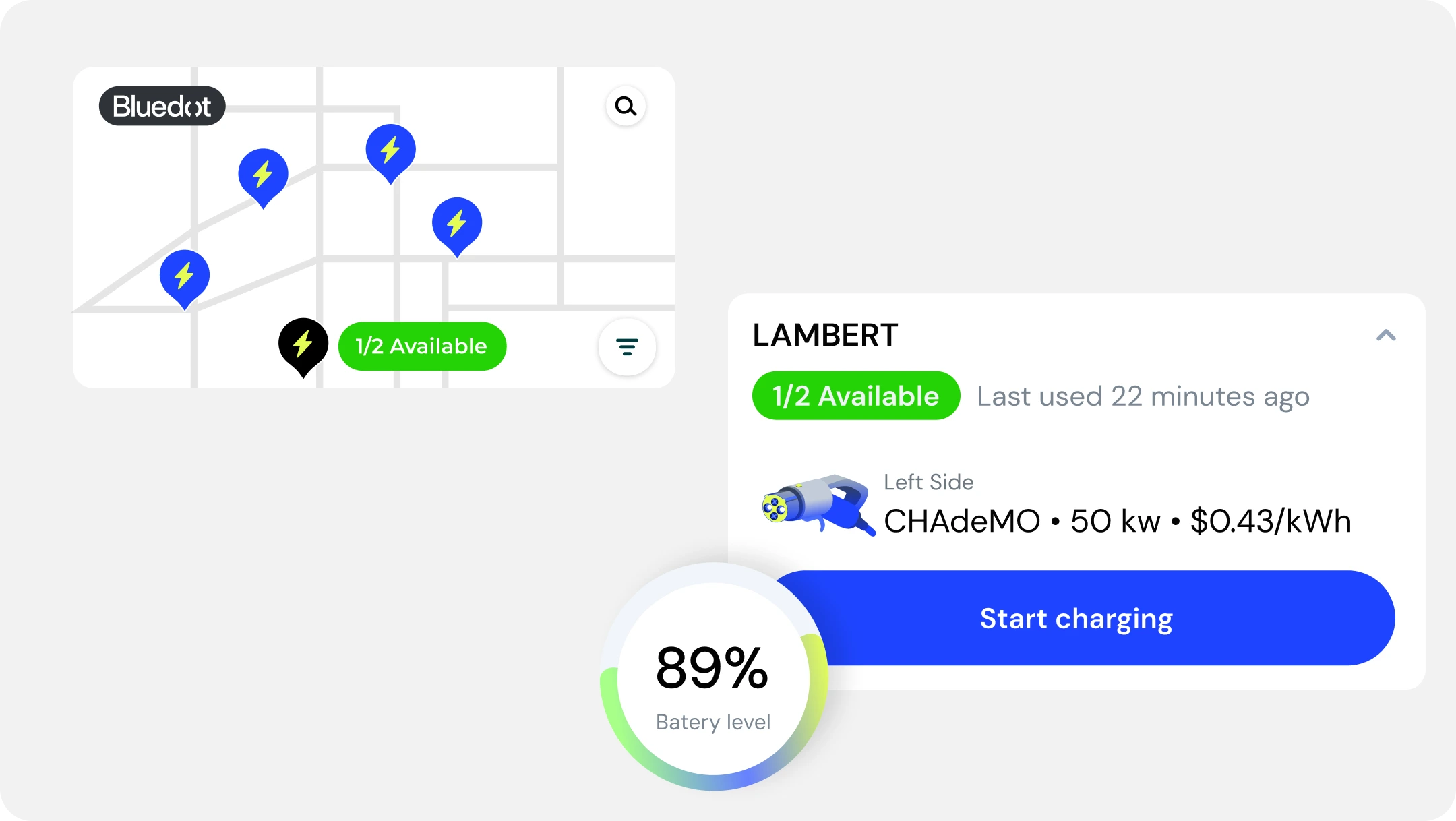
Background:Charging started with discovery
In Bluedot, finding a charger was more than a search task. It was the starting point for charging, payments and rewards — making speed, relevance and clarity essential in the discovery experience.
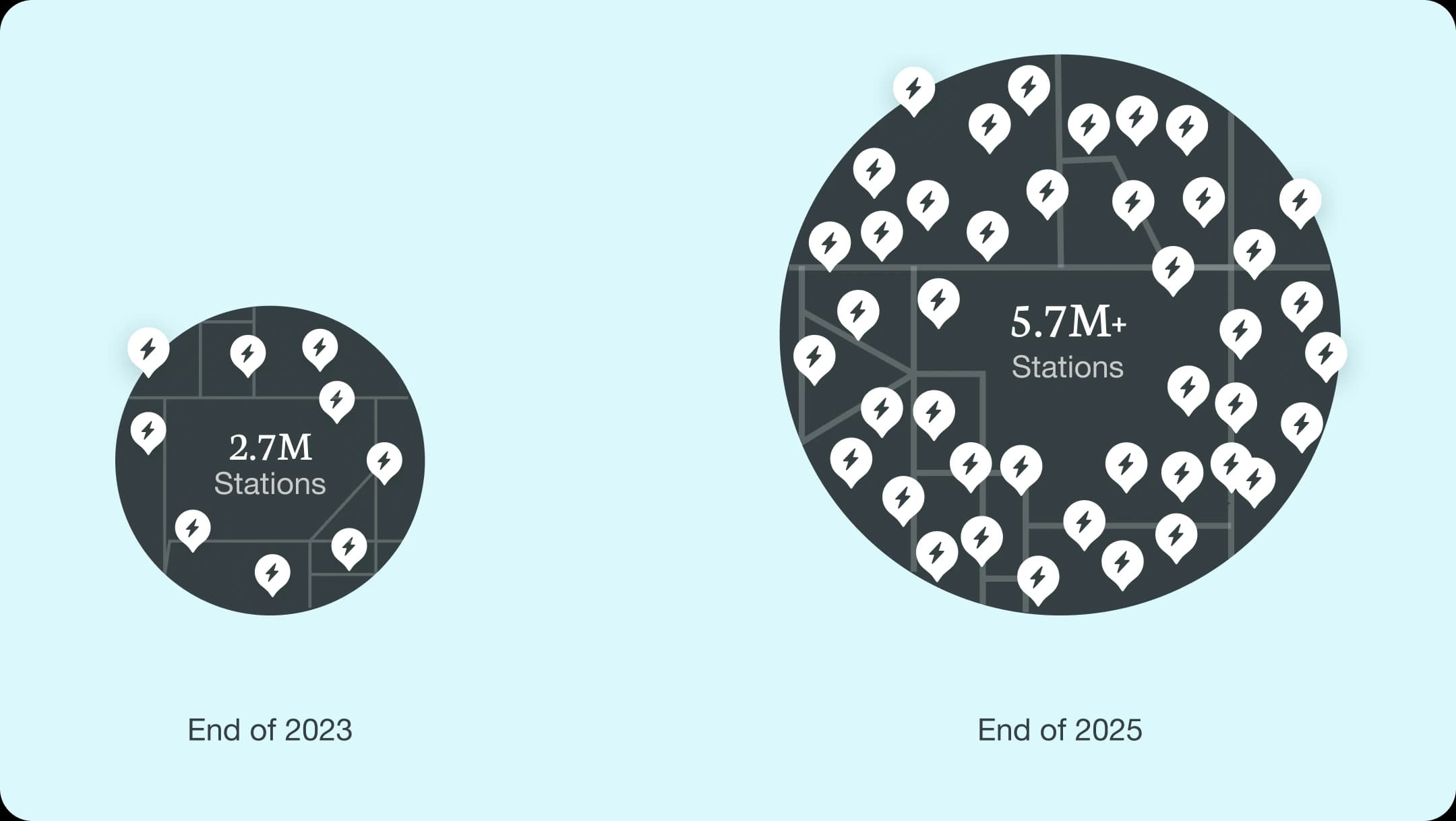
More stations, more decisions
As public charging infrastructure expanded, drivers had more stations, networks, connector types and charging speeds to evaluate. That growth made charger discovery more complex and increased the need for a faster, more relevant filtering experience.
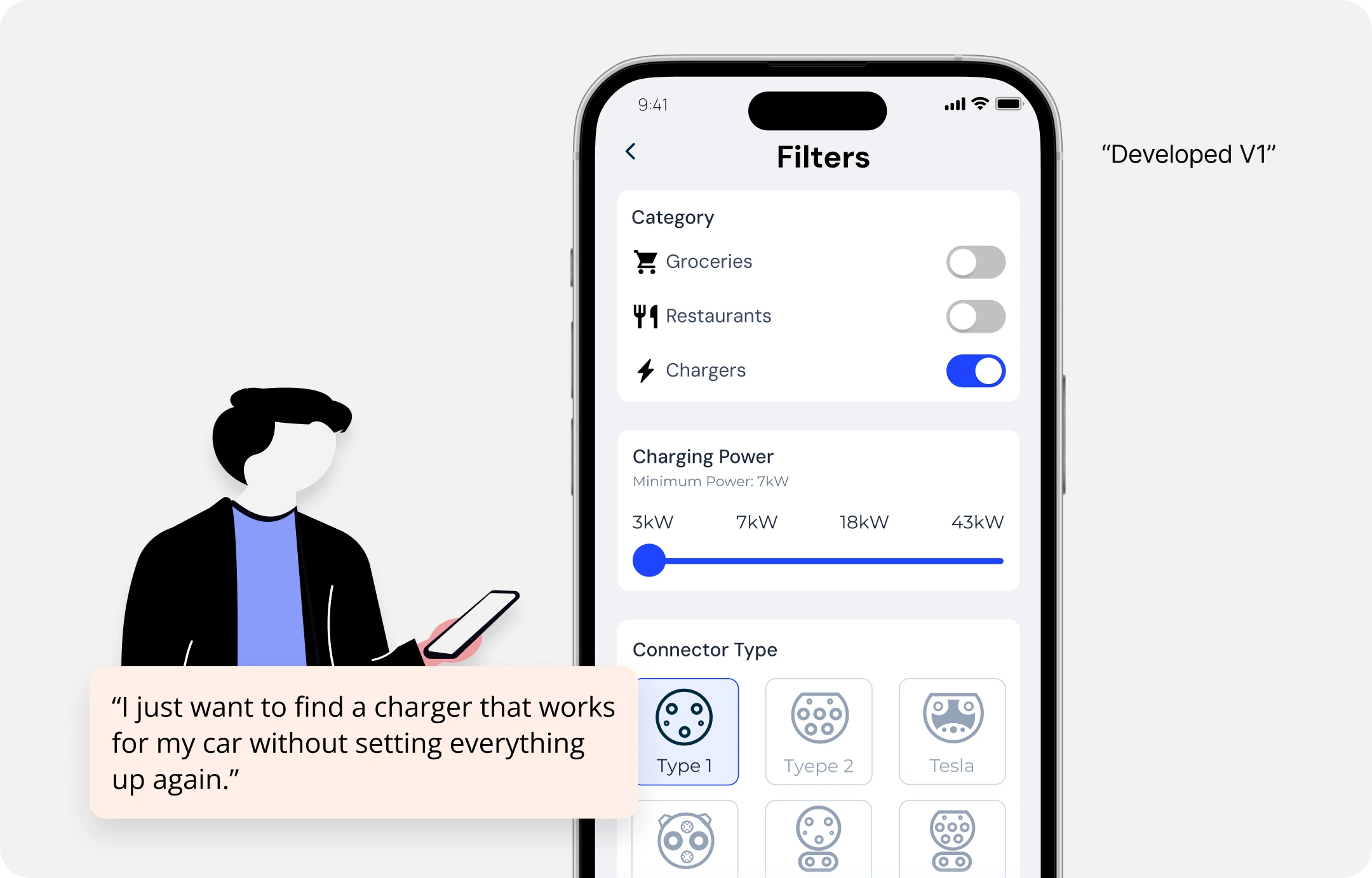
Problem:Finding a compatible charger took more effort than it should.
Selecting the right station meant repeating the same setup steps around connector type, charging speed and vehicle compatibility, creating unnecessary friction in a high-intent journey.
50kW–500kW
Charging speeds users
could filter by
9+
Connector types
3
Fast charging standards
My role
As the sole product designer, I led the redesign of the charger discovery experience across mobile. My role included problem framing, user flow design, interaction design, prototyping and collaboration with product and engineering teams from concept to implementation.
The challenge was not helping users find more chargers, but helping them find the right charger. Drivers needed to consider connector compatibility, charging speed and vehicle requirements before starting a session.
The solution focused on reducing decision-making effort through vehicle-aware defaults, simplified filtering and a more relevant discovery experience.
Finding a charger should be simple.
Instead, drivers were expected to understand charging speeds, connector types and vehicle compatibility before making a decision.
The problem wasn't a lack of chargers. It was the effort required to figure out which charger would actually work.
When users are forced to compare technical details, confidence drops and decision-making slows down.
Design principles
Reduce repeated setup
Drivers shouldn't have to reconfigure the same charging preferences every time they search.
Start with relevance
The experience should surface more relevant charger options by using vehicle context wherever possible.
Keep decisions simple
Finding a charger is a high-intent task, so filtering should feel quick, clear and easy to act on.
Preserve user control
Personalization should guide the experience, but users should still be able to adjust filters when needed.

Vehicle context started with VIN
Capturing VIN during onboarding allowed the product to identify key vehicle attributes early, creating the foundation for more relevant filtering and compatibility-aware discovery.
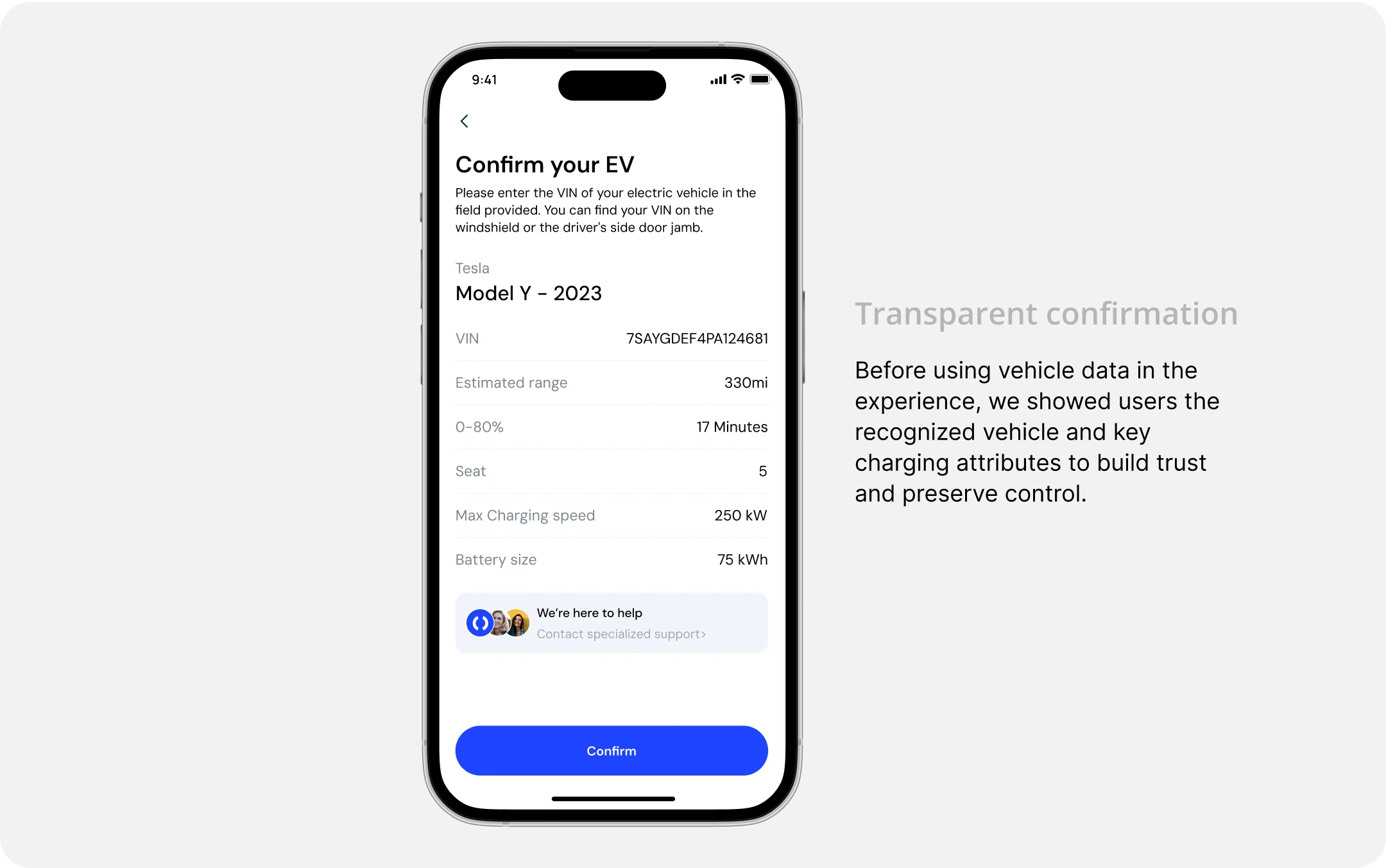
Before using vehicle data in the experience, we showed users the recognized vehicle and key charging attributes to build trust and preserve control.

Solution:Vehicle-aware filtering in action
With vehicle details available, users could start from filters shaped around compatibility, charging speed and connector type instead of configuring everything manually.
Result
28.1%
Increase in progression from filter application to station detail, based on Mixpanel funnel comparison before and after launch.
62%
Vehicle-aware filtering was adopted by 62% of users with saved vehicle data.
User feedbacks
“...I am not lost in hundreds of stations anymore...”
“After the latest update, the app feels much easier to use overall especially the filter experience. Having it adapt to my car saves me from setting everything up again.”
The challenge wasn't helping users find more chargers. It was helping them find the right one with confidence.
We learned that most drivers don't think in connector types, charging standards or power outputs. They think in a much simpler question:
"Will this charger work for my car?"
The biggest improvement came from shifting complexity away from the discovery experience. By collecting vehicle context earlier in the journey, we were able to reduce repetitive setup, surface more relevant options and simplify decision-making without limiting user control.
This project reinforced an important lesson: personalization is most effective when it removes effort, not choice.